

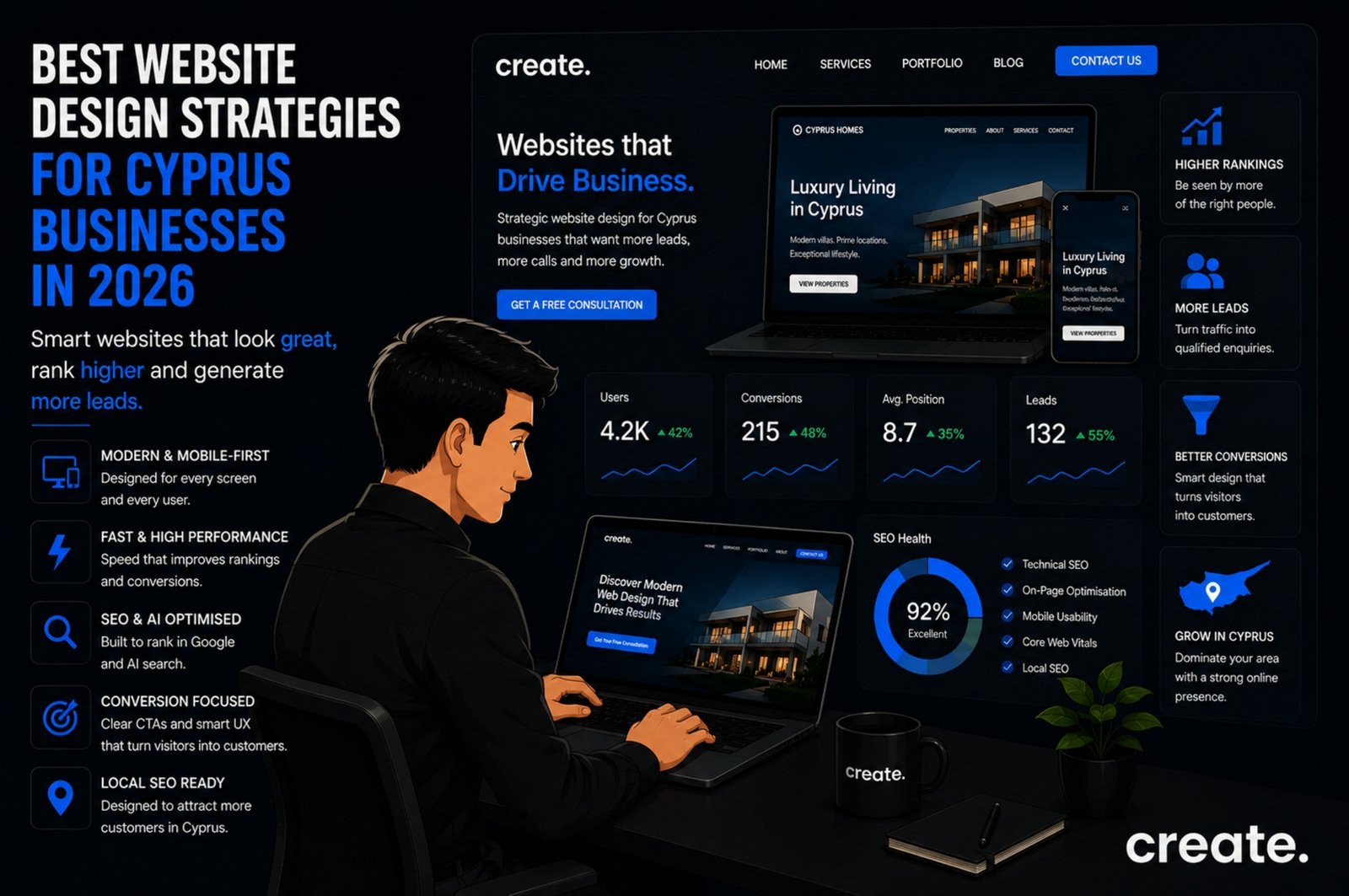
Ένας ιστότοπος επιχείρησης το 2026 πρέπει να κάνει περισσότερα από το να φαίνεται επαγγελματικός. Πρέπει να μεταδίδει την αξία γρήγορα, να λειτουργεί αξιόπιστα σε κινητά, να υποστηρίζει την ορατότητα στις μηχανές αναζήτησης και να μετατρέπει την προσοχή σε μετρήσιμα ερωτήματα, κρατήσεις ή πωλήσεις.
Για τις κυπριακές επιχειρήσεις που εξυπηρετούν τοπικούς κατοίκους, διεθνείς αγοραστές, τουρίστες ή επαγγελματίες που μετεγκαθίστανται, ο ιστότοπος πρέπει επίσης να χειρίζεται διαφορετικά επίπεδα εξοικείωσης, γλωσσικών αναγκών και συμπεριφοράς λήψης αποφάσεων.
Σχεδιάστε την Ιστοσελίδα με Εμπορικό Στόχο
Κάθε σημαντική σελίδα θα πρέπει να έχει έναν καθορισμένο σκοπό. Μια σελίδα υπηρεσιών μπορεί να χρειάζεται να δημιουργεί αιτήματα προσφορών, μια σελίδα ακινήτου μπορεί να χρειάζεται να προτρέπει σε λήψεις φυλλαδίων και μια σελίδα κλινικής μπορεί να χρειάζεται να ενθαρρύνει την υποβολή ερωτημάτων για ραντεβού.
Πριν σχεδιάσετε διατάξεις, διευκρινίστε:
- Το κύριο κοινό για κάθε σελίδα
- Το πρόβλημα που προσπαθεί να λύσει ο επισκέπτης
- Τα απαραίτητα στοιχεία για την οικοδόμηση εμπιστοσύνης
- Η πιο πολύτιμη επόμενη ενέργεια
- Πώς θα μετρηθεί αυτή η ενέργεια
Αυτό αποτρέπει το συνηθισμένο πρόβλημα μιας οπτικά στιλβωμένης ιστοσελίδας που δεν δίνει στους επισκέπτες σαφή πορεία προς τα εμπρός.
Δώστε προτεραιότητα στην εμπειρία κινητού
Ο responsive σχεδιασμός είναι μόνο το σημείο εκκίνησης. Οι επισκέπτες από κινητά θα πρέπει να είναι σε θέση να κατανοήσουν την προσφορά, να πλοηγηθούν στον ιστότοπο και να ολοκληρώσουν βασικές ενέργειες χωρίς υπερβολική κύλιση, τσιμπήματα ή τριβή με τη μορφή.
Ο αποτελεσματικός σχεδιασμός για κινητά περιλαμβάνει:
- Σαφείς επικεφαλίδες και συνοπτικό εισαγωγικό κείμενο
- Ευανάγνωστη τυπογραφία και επαρκής απόσταση
- Πλοήγηση και κουμπιά φιλικά προς το πάτημα
- Σύντομες, καλά επισημασμένες φόρμες ερωτημάτων
- Επιλογές κλήσης με κλικ ή ανταλλαγής μηνυμάτων, όπου χρειάζεται
- Εικόνες και βίντεο που δεν κατακλύζουν τη σελίδα
- Γρήγορη φόρτωση σε κανονικές συνδέσεις κινητής τηλεφωνίας
Κάντε την απόδοση μέρος του σχεδιασμού
Η ταχύτητα της σελίδας επηρεάζεται από τις αποφάσεις σχεδιασμού. Τα υπερμεγέθη μέσα, οι περιττές κινούμενες εικόνες, τα υπερβολικά σενάρια τρίτων και τα κακώς διαμορφωμένα πρόσθετα μπορούν να υπονομεύσουν την εμπειρία.
Ένας ιστότοπος που λαμβάνει υπόψη την απόδοση χρησιμοποιεί εικόνες κατάλληλου μεγέθους, σύγχρονες μορφές, αποτελεσματική φιλοξενία, ελεγχόμενη φόρτωση σεναρίων και επαναχρησιμοποιήσιμα στοιχεία σχεδιασμού. Η απόδοση θα πρέπει να δοκιμάζεται καθ' όλη τη διάρκεια της ανάπτυξης και όχι να αντιμετωπίζεται ως τελική εργασία καθαρισμού.
Σε εξέλιξη φιλοξενία και συντήρηση έχει επίσης σημασία επειδή τα θέματα, τα πρόσθετα, οι ενσωματώσεις και το περιεχόμενο συνεχίζουν να αλλάζουν μετά την κυκλοφορία.
Δημιουργήστε σαφείς διαδρομές μετατροπής
Οι επισκέπτες δεν θα πρέπει να χρειάζεται να μαντεύουν τι να κάνουν στη συνέχεια. Οι παροτρύνσεις για δράση πρέπει να είναι συγκεκριμένες για τη σελίδα και ανάλογες με το επίπεδο πρόθεσης του επισκέπτη.
Χρήσιμες ενέργειες μπορεί να περιλαμβάνουν:
- Ζητήστε προσφορά
- Κλείστε ραντεβού για συμβουλευτική συνεδρία ή επίσκεψη
- Κατεβάστε ένα φυλλάδιο ή έναν οδηγό
- Ελέγξτε τη διαθεσιμότητα
- Καλέστε ή στείλτε μήνυμα
- Ολοκλήρωση αγοράς
Η φόρμα ή η ροή κράτησης θα πρέπει να ζητά μόνο πληροφορίες που είναι πραγματικά απαραίτητες σε αυτό το στάδιο. Τα μηνύματα επιβεβαίωσης και τα email παρακολούθησης θα πρέπει επίσης να ελέγχονται, ώστε η διαδικασία να μην τελειώνει με μια σιωπηλή υποβολή φόρμας.
Χρησιμοποιήστε πραγματικά στοιχεία και πρωτότυπο περιεχόμενο
Οι γενικές εικόνες αρχείου και οι γενικοί ισχυρισμοί δυσκολεύουν έναν επισκέπτη να κρίνει την αξιοπιστία. Οι ισχυροί ιστότοποι χρησιμοποιούν πραγματική εργασία, πραγματικά περιβάλλοντα και συγκεκριμένες εξηγήσεις.
Ανάλογα με την επιχείρηση, χρήσιμα αποδεικτικά στοιχεία μπορεί να περιλαμβάνουν:
- Μελέτες περιπτώσεων και αποτελέσματα έργων
- Μαρτυρίες πελατών και επαληθευμένες κριτικές
- Προφίλ ομάδων και προσόντα
- Πρωτότυπες φωτογραφίες και βίντεο
- Διαδικασίες, χρονοδιαγράμματα και παραδοτέα
- Συχνές ερωτήσεις βασισμένες σε πραγματικά ερωτήματα
Μας υπηρεσίες δημιουργίας περιεχομένου μπορεί να παρέχει μια συνεπή οπτική βιβλιοθήκη για τον ιστότοπο και τις σχετικές καμπάνιες.
Ενσωματώστε το SEO από την αρχή
Το SEO θα πρέπει να επηρεάζει την αρχιτεκτονική πληροφοριών, τα θέματα των σελίδων, τους εσωτερικούς συνδέσμους και την τεχνική υλοποίηση. Η προσθήκη λέξεων-κλειδιών μετά την ολοκλήρωση του σχεδιασμού δεν υποκαθιστά τη δημιουργία ενός ιστότοπου με βάση τον τρόπο αναζήτησης των πελατών.
Ένας ιστότοπος έτοιμος για αναζήτηση περιλαμβάνει:
- Μια λογική ιεραρχία σελίδων
- Ένα σαφές κύριο θέμα ανά σελίδα
- Περιγραφικοί τίτλοι, επικεφαλίδες και μεταδεδομένα
- Περιεχόμενο με δυνατότητα ευρετηρίασης και σωστές κανονικές διευθύνσεις URL
- Εσωτερικοί σύνδεσμοι μεταξύ σχετικών υπηρεσιών, τοποθεσιών και οδηγών
- Βελτιστοποιημένες εικόνες και περιγραφικό εναλλακτικό κείμενο
- Δομημένα δεδομένα όπου αντιπροσωπεύουν με ακρίβεια το περιεχόμενο
Δείτε μας Οδηγός SEO για επιχειρήσεις στην Κύπρο για το ευρύτερο πλαίσιο αναζήτησης.
Προετοιμασία περιεχομένου για αναζήτηση με υποστήριξη τεχνητής νοημοσύνης
Οι διεπαφές αναζήτησης συνοψίζουν και συγκρίνουν όλο και περισσότερο πληροφορίες. Οι ιστότοποι είναι πιο εύκολο να ερμηνευτούν όταν το περιεχόμενό τους είναι συγκεκριμένο, καλά δομημένο και αποδοτέο.
Χρήσιμες πρακτικές περιλαμβάνουν:
- Απαντώντας άμεσα σε σημαντικά ερωτήματα
- Χρήση περιγραφικών επικεφαλίδων H2 και H3
- Σαφής εξήγηση των υπηρεσιών, των περιορισμών και των διαδικασιών
- Διατήρηση της ομοιομορφίας των στοιχείων της εταιρείας σε ολόκληρο τον ιστό
- Δημοσίευση πρωτότυπης εμπειρογνωμοσύνης αντί για γενικό υλικό πληρώσεως
- Ενημέρωση πληροφοριών όταν αλλάζουν οι υπηρεσίες, οι τιμές ή οι κανονισμοί
Ο στόχος δεν είναι να γράφουμε για μηχανές. Είναι να κάνουμε τις πληροφορίες υψηλής ποιότητας εύκολα κατανοητές τόσο για τους ανθρώπους όσο και για τα συστήματα.
Σχεδιασμός για Προσβασιμότητα
Ο προσβάσιμος σχεδιασμός βελτιώνει την χρηστικότητα για ένα ευρύτερο κοινό. Επίσης, μειώνει τις αποφευκτές τριβές μεταξύ συσκευών και περιβαλλόντων.
Βασικές παράμετροι περιλαμβάνουν την επαρκή αντίθεση, την πλοήγηση με πληκτρολόγιο, το ουσιαστικό κείμενο συνδέσμων, τις ετικέτες φόρμας, τις ορατές καταστάσεις εστίασης, τις περιγραφικές εναλλακτικές εικόνες και τις λεζάντες ή τις μεταγραφές για σημαντικά μέσα.
Σεβαστείτε τις απαιτήσεις απορρήτου και παρακολούθησης
Τα αναλυτικά στοιχεία, τα εικονοστοιχεία διαφήμισης, τα ενσωματωμένα μέσα και τα εργαλεία φόρμας θα πρέπει να εφαρμόζονται σκόπιμα. Οι μηχανισμοί συναίνεσης πρέπει να αντικατοπτρίζουν τις τεχνολογίες που χρησιμοποιούνται στην πραγματικότητα στον ιστότοπο, ενώ η παρακολούθηση θα πρέπει να επικεντρώνεται σε σημαντικά επιχειρηματικά γεγονότα και όχι στη συλλογή δεδομένων χωρίς σκοπό.
Χρησιμοποιήστε ένα σύστημα περιεχομένου που μπορεί να διατηρηθεί
Ένας ιστότοπος θα πρέπει να ενημερώνεται εύκολα χωρίς να χρειάζεται να ανακατασκευάζονται οι διατάξεις κάθε φορά. Τα επαναχρησιμοποιήσιμα πρότυπα, τα εγγενή πεδία περιεχομένου και ένα συνεπές σύστημα σχεδίασης μειώνουν τα σφάλματα και διατηρούν τις νέες σελίδες ευθυγραμμισμένες με την επωνυμία.
Αυτό είναι ιδιαίτερα σημαντικό για επιχειρήσεις που δημοσιεύουν καταχωρίσεις ακινήτων, άρθρα, προφίλ ομάδων, τοποθεσίες, μενού ή υπηρεσίες που αλλάζουν συχνά.
Μέτρηση και Βελτίωση μετά την κυκλοφορία
Η έναρξη είναι η αρχή του κύκλου βελτιστοποίησης. Εξετάστε πώς οι επισκέπτες μετακινούνται σε βασικές σελίδες, ποιες φόρμες δημιουργούν εξειδικευμένα ερωτήματα, από πού φεύγουν οι χρήστες και πώς αποδίδει ο ιστότοπος σε πραγματικές συσκευές.
Χρήσιμες εργασίες μετά την κυκλοφορία περιλαμβάνουν:
- Μετατροπή και δοκιμή φόρμας
- Κριτικές απόδοσης αναζήτησης
- Παρακολούθηση ταχύτητας σελίδας
- Ενημερώσεις περιεχομένου και εσωτερικοί σύνδεσμοι
- Έλεγχοι σπασμένων συνδέσμων και τεχνικοί έλεγχοι
- Βελτίωση σελίδων με υψηλή επισκεψιμότητα αλλά χαμηλή μετατροπή
Συχνές Ερωτήσεις
Πόσο συχνά πρέπει μια κυπριακή επιχείρηση να ανασχεδιάζει τον ιστότοπό της;
Δεν υπάρχει σταθερό χρονοδιάγραμμα. Ένας επανασχεδιασμός δικαιολογείται όταν ο ιστότοπος δεν αντικατοπτρίζει πλέον την επιχείρηση, έχει κακή απόδοση, είναι δύσκολο να συντηρηθεί ή δεν υποστηρίζει τους τρέχοντες στόχους μάρκετινγκ και μετατροπής.
Πρέπει το SEO να γίνεται κατά τη διάρκεια ή μετά την κατασκευή του ιστότοπου;
Το SEO θα πρέπει να λαμβάνεται υπόψη κατά τον σχεδιασμό, την αρχιτεκτονική περιεχομένου και την ανάπτυξη. Η τεχνική και συντακτική βελτιστοποίηση μπορεί να συνεχιστεί μετά την κυκλοφορία, αλλά τα θεμέλια θα πρέπει να τεθούν από την αρχή.
Τι έχει μεγαλύτερη σημασία: ο σχεδιασμός ή η ταχύτητα;
Δεν πρόκειται για αντίθετες προτεραιότητες. Ο αποτελεσματικός σχεδιασμός χρησιμοποιεί την οπτική ιεραρχία, το περιεχόμενο και τα μέσα με τρόπο που υποστηρίζει τη σαφήνεια χωρίς να δημιουργεί περιττό κόστος απόδοσης.
Δημιουργήστε έναν ιστότοπο που υποστηρίζει την ανάπτυξη
Η καλύτερη στρατηγική σχεδιασμού ιστοσελίδων συνδυάζει σαφή τοποθέτηση, χρήσιμο περιεχόμενο, χρηστικότητα σε κινητά, απόδοση, ορατότητα αναζήτησης και αξιόπιστη παρακολούθηση μετατροπών.
Δημιουργία επαφής για να συζητήσουμε έναν επανασχεδιασμό ιστοσελίδας ή μια νέα ιστοσελίδα που εστιάζει στις μετατροπές για την επιχείρησή σας στην Κύπρο.