

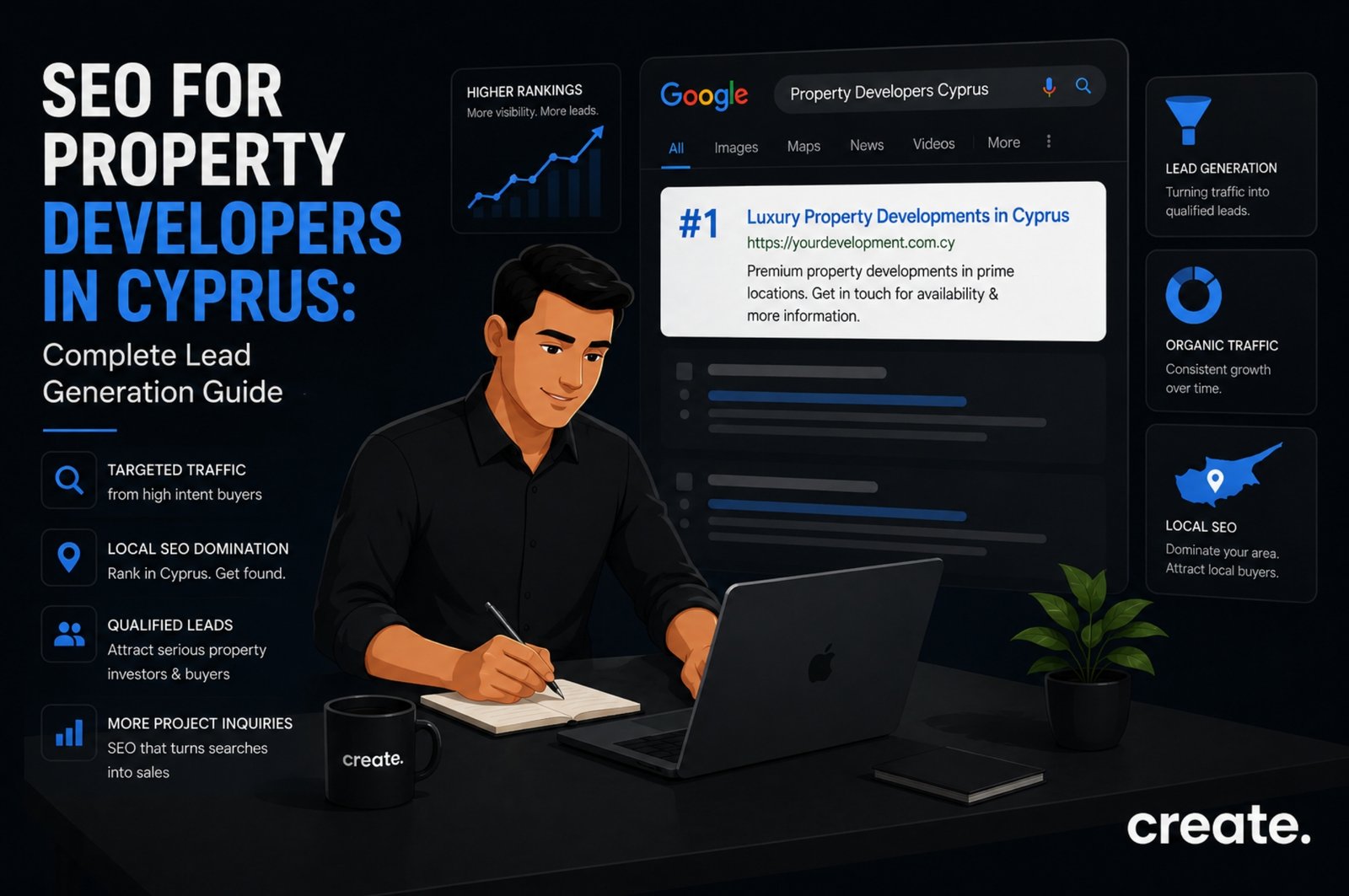
Οι αγοραστές ακινήτων σπάνια ξεκινούν με την επωνυμία ενός κατασκευαστή. Ξεκινούν με μια απαίτηση: ένα διαμέρισμα στη Λεμεσό, μια βίλα στην Πάφο, μια ευκαιρία επί χάρτου στη Λάρνακα ή ένα επενδυτικό ακίνητο στην Κύπρο. Το SEO βοηθά μια ανάπτυξη να εμφανίζεται κατά τη διάρκεια αυτής της διαδικασίας έρευνας και δίνει στον αγοραστή αρκετή αυτοπεποίθηση για να κάνει το επόμενο βήμα.
Ο παρών οδηγός συγκεντρώνει τις προηγούμενες σελίδες της Create σχετικά με το SEO στον τομέα των ακινήτων σε έναν ενιαίο, εξειδικευμένο οδηγό. Εξηγεί πώς οι κατασκευαστές ακινήτων μπορούν να ενισχύσουν την οργανική τους προβολή χωρίς να δημιουργούν επαναλαμβανόμενες σελίδες για έργα και τοποθεσίες που ανταγωνίζονται μεταξύ τους.
Γιατί το SEO έχει σημασία για τους κατασκευαστές ακινήτων στην Κύπρο
Οι επί πληθώρα διαφημιστικές καμπάνιες μπορούν να δημιουργήσουν άμεσες ερωτήσεις, αλλά η οργανική αναζήτηση δημιουργεί μια μακροπρόθεσμη διαδρομή προς τους αγοραστές που συγκρίνουν ενεργά τοποθεσίες, τύπους έργων, τιμές, πλεονεκτήματα τρόπου ζωής και επενδυτικές παραμέτρους.
Ένα ισχυρό σύστημα SEO ακινήτων μπορεί να υποστηρίξει:
- Ορατότητα για συγκεκριμένες αναπτύξεις και τύπους μονάδων.
- Διεθνείς αγοραστές που κάνουν έρευνα για την Κύπρο πριν επικοινωνήσουν με έναν μεσίτη.
- Τοπικοί αγοραστές που συγκρίνουν νέα έργα ανά πόλη ή περιοχή.
- Εμπιστοσύνη μέσω λεπτομερών πληροφοριών έργου, εταιρικών αποδεικτικών στοιχειών και χρήσιμης καθοδήγησης.
- Μείωση της εξάρτησης από portals και πληρωμένη επισκεψιμότητα με την πάροδο του χρόνου.
Ο στόχος δεν είναι η επισκεψιμότητα για χάρη της. Είναι η προσέλκυση επισκεπτών των οποίων η συμπεριφορά αναζήτησης υποδηλώνει μια πραγματική ανάγκη για ακίνητο.
Διαχωρισμός Επωνυμίας, Έργου και Πρόθεσης Αγοραστή
Οι ιστότοποι ακινήτων συχνά συνδυάζουν πολλές προθέσεις αναζήτησης στην ίδια σελίδα. Μια πιο ξεκάθαρη αρχιτεκτονική τις διαχωρίζει:
- Σελίδες προγραμματιστών: ποια είναι η εταιρεία, το ιστορικό της, η ομάδα και η προσέγγισή της.
- Σελίδες έργου: μία αυθεντική σελίδα για κάθε εξέλιξη.
- Σελίδες τύπου ακινήτου: διαμερίσματα, βίλες, ρετιρέ ή επαγγελματικοί χώροι όπου είναι χρήσιμοι.
- Σελίδες τοποθεσίας: μόνο όπου ο προγραμματιστής έχει πραγματικά έργα και ξεχωριστές τοπικές πληροφορίες.
- Οδηγοί αγοραστή: ενημερωτικό περιεχόμενο που απαντά στις ερωτήσεις που καθυστερούν ένα αίτημα πληροφοριών.
Κάθε σελίδα θα πρέπει να έχει έναν κύριο σκοπό. Αποφύγετε τη δημιουργία πολλαπλών σελίδων που στοχεύουν σε μικρές παραλλαγές όπως “διαμερίσματα Λεμεσός”, “Λεμεσός διαμερίσματα” και “διαμερίσματα προς πώληση Λεμεσός”, όταν μια περιεκτική σελίδα μπορεί να καλύψει την ίδια πρόθεση.
Δημιουργήστε Σελίδες Ανάπτυξης Υψηλής Ποιότητας
Μια σελίδα ανάπτυξης πρέπει να κάνει περισσότερα από το να εμφανίζει μια γκαλερί και μια φόρμα επικοινωνίας. Θα πρέπει να απαντά στα εμπορικά και πρακτικά ερωτήματα που θα έχει ένας σοβαρός αγοραστής.
Συμπεριλάβετε
- Μια σαφής επισκόπηση του έργου και το πλαίσιο της τοποθεσίας.
- Διαθέσιμοι τύποι μονάδων, βασικές προδιαγραφές και τρέχουσα κατάσταση.
- Σχέδια, τρισδιάστατες απεικονίσεις, φωτογραφία και βίντεο όπου αρμόζει.
- Κοντινές ανέσεις και ρεαλιστικό πλαίσιο μετακίνησης.
- Χρονοδιάγραμμα κατασκευής και διαδικασία αγοράς.
- Διαπιστευτήρια προγραμματιστή και σχετικό ολοκληρωμένο έργο.
- Μια μπροσούρα με δυνατότητα λήψης ή μια επιλογή ερώτησης που παρακολουθείται εύκολα.
- Συχνές ερωτήσεις ειδικές για το έργο.
Χρησιμοποιήστε την ίδια διεύθυνση URL καθ' όλη τη διάρκεια της ανάπτυξης. Ενημερώστε τη σελίδα καθώς αλλάζουν η διαθεσιμότητα και η πρόοδος της κατασκευής, αντί να δημιουργείτε νέες εκδόσεις που διαιρούν την εγκυρότητα.
Έρευνα Διεθνών Αγοραστών-Στόχων
Οι αναζητήσεις από το εξωτερικό συχνά ξεκινούν πολύ πριν από ένα αίτημα πληροφοριών για ακίνητο. Οι αγοραστές μπορεί να ερευνούν τοποθεσίες, διαδικασίες απόκτησης ακινήτου, ζήτηση για ενοικίαση, τρόπο ζωής, σχολεία, υγειονομική περίθαλψη και ταξιδιωτικές συνδέσεις πριν συγκρίνουν συγκεκριμένα έργα.
Το χρήσιμο υποστηρικτικό περιεχόμενο μπορεί να περιλαμβάνει:
- Πώς να αξιολογήσετε μια υπό ανέγερση ανάπτυξη στην Κύπρο.
- Συγκρίσεις μεταξύ σχετικών πόλεων ή γειτονιών.
- Ποιες πληροφορίες να ζητήσετε πριν κλείσετε μια μονάδα.
- Πώς διαχειρίζονται οι ενημερώσεις κατασκευής και τα στάδια πληρωμής.
- Οδηγοί για τον τρόπο ζωής και τις πρακτικές ανέσεις γύρω από ένα έργο.
Διατηρήστε τους νομικούς, φορολογικούς και επενδυτικούς ισχυρισμούς προσεκτικά διατυπωμένους. Το περιεχόμενο που αφορά ακίνητα θα πρέπει να καθοδηγεί την έρευνα και να ενθαρρύνει τη λήψη επαγγελματικών συμβουλών, αντί να δίνει υποσχέσεις σχετικά με αποδόσεις, κατοικία ή μελλοντική αξία.
Χρησιμοποιήστε το Τοπικό SEO χωρίς τη δημιουργία σελίδων πόλεων χαμηλής ποιότητας
Οι προγραμματιστές θα πρέπει να συνδέουν τον ιστότοπό τους με τις τοποθεσίες όπου δραστηριοποιούνται πραγματικά. Μια χρήσιμη σελίδα πόλης ή συνοικίας χρειάζεται κάτι περισσότερο από μια ξαναγραμμένη εισαγωγή. Θα πρέπει να περιλαμβάνει ενεργά έργα, τοπικό πλαίσιο αγοράς, φωτογραφίες της περιοχής, σχετικές ανέσεις και άμεσους συνδέσμους προς διαθέσιμες αναπτύξεις.
Διατηρήστε ακριβείς πληροφορίες οργανισμού και ένα πλήρες προφίλ επιχειρήσεων Google. Ενθαρρύνετε τις κριτικές όπου αρμόζει και κερδίστε τοπικές αναφορές από προμηθευτές, συνεργάτες, συνδέσμους και αξιόπιστες δημοσιεύσεις.
Τεχνικό SEO για Ιστότοπους Ακινήτων
Οι ιστότοποι ακινήτων είναι πλούσιοι σε εικόνες και συχνά χρησιμοποιούν φίλτρα, χάρτες, λήψεις κατόψεων και σενάρια (scripts) τρίτων. Αυτές οι λειτουργίες μπορούν να δημιουργήσουν προβλήματα απόδοσης και ευρετηρίασης εάν δεν ελέγχονται.
Έλεγχος Φίλτρου και URL Αναζήτησης
Τα φίλτρα ακινήτων μπορούν να δημιουργήσουν χιλιάδες σχεδόν διπλότυπες διευθύνσεις URL. Αποφασίστε ποιοι συνδυασμοί αξίζουν σελίδες προορισμού με δυνατότητα ευρετηρίασης και αποτρέψτε τους υπόλοιπους από τη σπατάλη ανίχνευσης.
Βελτιστοποίηση εικόνων και βίντεο
Σερβίρετε εικόνες σωστού μεγέθους, σύγχρονες μορφές και με νόημα εναλλακτικό κείμενο (alt text). Φορτώστε με καθυστέρηση (lazy-load) τα πολυμέσα κάτω από το οπτικό πεδίο (below-the-fold) και αποφύγετε να αναγκάζετε τους επισκέπτες από κινητά να κατεβάζουν γלες μεγέθους επιτραπέζιου υπολογιστή.
Διατηρήστε τα Πωλημένα Έργα Χρήσιμα
Μην διαγράφετε αμέσως μια ολοκληρωμένη ή πωλημένη σελίδα ανάπτυξης εάν διαθέτει συνδέσμους, επισκεψιμότητα ή αξία ως αποδεικτικό στοιχειό. Ενημερώστε την κατάστασή της, αφαιρέστε παραπλανητικές προτροπές δράσης (CTA) διαθεσιμότητας και συνδέστε την με τρέχοντα έργα.
Χρησιμοποιήστε Δομημένα Δεδομένα με Ακρίβεια
Η οργάνωση, η διαδρομή πλοήγησης (breadcrumb), το άρθρο και οι κατάλληλες πληροφορίες ιδιοτήτων μπορούν να βελτιώσουν την κατανόηση από τις μηχανές. Επισημάνετε μόνο λεπτομέρειες που είναι ορατές και τρέχουσες.
Create: ένα συγκρότημα περιεχομένου για τον κλάδο των ακινήτων
Ένα πρόγραμμα SEO για ακίνητα λειτουργεί καλύτερα όταν οι σελίδες έργων υποστηρίζονται από μια εστιασμένη βιβλιοθήκη περιεχομένου. Το περιεχόμενο θα πρέπει να απαντά στις ερωτήσεις των αγοραστών και να ενισχύει την τεχνογνωσία του κατασκευαστή αντί να επαναλαμβάνει διαφημιστικό κείμενο.
Ένα πρακτικό σύμπλεγμα μπορεί να περιλαμβάνει:
- Ένας βασικός οδηγός για Δημιουργία πελατών (leads) για κατασκευαστές ακινήτων στην Κύπρο.
- Ενημερώσεις και ορόσημα ανά έργο.
- Οδηγοί περιοχών και τρόπου ζωής συνδεδεμένοι με ενεργές αναπτύξεις.
- Μάρκετινγκ επί σχεδίου και περιεχόμενο εκπαίδευσης αγοραστών.
- Καθοδήγηση για φωτογραφία, βίντεο και drone.
- Μελέτες περιπτώσεων που εξηγούν αποφάσεις καμπάνιας και ιστοσελίδας.
Συνδέστε τα υποστηρικτικά άρθρα με τη σχετική σελίδα έργου ή υπηρεσίας. Αποφύγετε τη δημοσίευση πολλών άρθρων που στοχεύουν στην ίδια κύρια φράση με μόνο επιφανειακές διαφορές.
Βελτίωση της μετατροπής από την οργανική επισκεψιμότητα
Οι κατατάξεις είναι πολύτιμες μόνο εάν ο ιστότοπος μετατρέπει το ενδιαφέρον σε μια ειδικευμένη συνομιλία. Κάθε σημαντική σελίδα πρέπει να παρέχει ένα λογικό επόμενο βήμα.
- Διατηρήστε τις λήψεις ενημερωτικών φυλλαδίων και τις φόρμες επικοινωνίας σύντομες.
- Δηλώστε τι συμβαίνει αφού κάποιος υποβάλει μια φόρμα.
- Προσφέρετε άμεσες επιλογές τηλεφώνου και WhatsApp όπου είναι επιχειρησιακά σκόπιμο.
- Παρακολουθήστε το έργο και τη σελίδα που σχετίζονται με κάθε ερώτηση.
- Συνδέστε τις φόρμες με ένα CRM ώστε η παρακολούθηση να είναι συνεπής.
- Χρησιμοποιήστε προσεκτικά το retargeting για επισκέπτες που είδαν συγκεκριμένα έργα.
Create’s Συστήματα CRM και αυτοματισμός Η υπηρεσία εξηγεί πώς οι συλλεγόμενοι δυνητικοί πελάτες μπορούν να οργανωθούν μετά την αρχική ερώτηση.
Μέτρησε σωστά το SEO ακινήτων
Μην κρίνετε την απόδοση μόνο από τη συνολική επισκεψιμότητα του ιστότοπου. Παρακολουθήστε:
- Προκριθείσες ερωτήσεις ανά έργο και πηγή.
- Οργανικές σελίδες προορισμού που συνέβαλαν σε μετατροπές.
- Λήψεις φυλλαδίων, κλήσεις και κλικ στο WhatsApp.
- Ορατότητα αναζήτησης για έργο, τοποθεσία και θέματα οδηγού αγοραστή.
- Πσοστό μετατροπής ανά χώρα, συσκευή και τύπο σελίδας.
- Ποιότητα και πρόοδος των δυνητικών πελατών στο CRM.
Αυτό παρέχει μια πιο ακριβή εικόνα από την αναφορά μιας λίστας θέσεων λέξεων-κλειδιών χωρίς εμπορικό πλαίσιο.
Συνήθη Λάθη SEO στον Κλάδο των Ακινήτων
- Χρήση ίδιων περιγραφών σε όλες τις πύλες και στον ιστότοπο του προγραμματιστή.
- Δημοσίευση μιας ξεχωριστής σελίδας για κάθε παραλλαγή λέξης-κλειδιού.
- Απόκρυψη βασικών πληροφοριών έργου πίσω από αρχεία PDF.
- Μεταφόρτωση ασυμπίεστων renders και galleries.
- Διαγραφή σελίδων πωλημένων έργων χωρίς έλεγχο της αξίας τους στο SEO.
- Υποβολή μη τεκμηριωμένων επενδυτικών ισχυρισμών ή ισχυρισμών κατάταξης.
- Αποστολή κάθε καμπάνιας στην αρχική σελίδα.
- Αποτυχία σύνδεσης ερωτημάτων με ένα έργο και μια πηγή.
Συχνές Ερωτήσεις
Πρέπει κάθε κτηματομεσιτική ανάπτυξη να έχει τη δική της ιστοσελίδα;
Όχι πάντα. Ένας αποκλειστικός ιστότοπος μπορεί να δικαιολογηθεί για ένα μεγάλο ή ανεξάρτητα branded έργο, αλλά πολλοί προγραμματιστές επωφελούνται από τη διατήρηση της αυθεντίας του έργου εντός ενός ισχυρού domain. Η απόφαση θα πρέπει να λαμβάνει υπόψη τη στρατηγική branding, τον προϋπολογισμό, τη διάρκεια της καμπάνιας και τη μακροπρόθεσμη συντήρηση.
Πόσες σελίδες τοποθεσίας πρέπει να δημιουργήσει ένας προγραμματιστής;
Create: μόνο σελίδες που υποστηρίζονται από πραγματικά έργα, χρήσιμες τοπικές πληροφορίες και σαφή πρόθεση αγοράς. Η ποιότητα και η συνάφεια έχουν μεγαλύτερη σημασία από την κάλυψη κάθε ονόματος πόλης.
Μπορεί το SEO να αντικαταστήσει τα portals ακινήτων και την επί πληρωμή διαφήμιση;
Το SEO θα πρέπει να μειώνει την εξάρτηση με την πάροδο του χρόνου, όχι απαραίτητα να αντικαθιστά κάθε κανάλι απόκτησης. Πύλες, Google Ads, καμπάνιες Meta, συνεργασίες και η οργανική αναζήτηση μπορούν να συνεργαστούν όταν η παρακολούθηση είναι ενοποιημένη.
Τι συμβαίνει στο SEO όταν ένα έργο εξαντλείται;
Διατηρήστε τη σελίδα ως αρχείο ολοκληρωμένου έργου όταν διαθέτει εξουσιοδότηση ή χρήσιμα αποδεικτικά στοιχεία. Ενημερώστε την κατάσταση, αφαιρέστε τους ισχυρισμούς διαθεσιμότητας και κατευθύνετε τους επισκέπτες σε τρέχουσες εξελίξεις.
Δημιουργία στοιχείου προσέλκυσης οργανικών δυνητικών πελατών
Το αποτελεσματικό SEO για κατασκευαστές ακινήτων είναι ένα δομημένο σύστημα δημοσίευσης και μετατροπής. Οι σαφείς σελίδες έργων καταγράφουν την εμπορική πρόθεση, η χρήσιμη καθοδήγηση χτίζει εμπιστοσύνη, η τεχνική πειθαρχία προστατεύει την απόδοση και η ακριβής παρακολούθηση συνδέει την ορατότητα στις αναζητήσεις με πραγματικές ερωτήσεις.
Δημιουργία επαφής να εξετάσουμε τη δομή του έργου σας, την ορατότητα στις μηχανές αναζήτησης και τις ευκαιρίες υψηλότερης προτεραιότητας για ειδικευμένους υποψήφιους πελάτες ακινήτων.